Intended learning outcomes:
1. The ability to apply underlying concepts and principles of collaboration, conduct and presentation in photographic practice within a professional context.
2. Knowledge and critical understanding of the legal and financial responsibilities of the practicing photographer.
3. Knowledge and critical understanding of the social, ethical and economic contexts of creative industries.
4. The ability to use a range of established techniques to initiate, develop and evaluate a coherent business model.
This assignment is designed to support your developing professional practice. You will research key elements of working as a professional photographer and creative practitioner.
You will need to document and extend work done in sessions that addresses a broad range of relevant subjects such as law, ethics, collaboration, finance, promotion, competitions, business planning and dissemination of work.
You will:
· Record all of your sessions on professional practice
· Read around the subject and make notes on your reading
· Extend the work independently and use sources to support your research
· Develop a business plan
· Engage with work experience and write a reflective review of your activites
· Take part in setting up, running and promoting a student led competition for the public
Your live projects are a key part of this module. You will need to research and identify potential working opportunities. You must find at least one week’s work related to photography. This work could be for instance self-initiated and working with clients as a freelancer or working alongside a photographer or as part of an organisation, but you should consider what you will be learning from the experience. Make it useful to yourself!
All work to be documented in a reflective journal, which should be as an online blog or digital document to be printed at the end of the assignment. The language should not be casual as this is to be viewed as a professional document. Please review and edit this carefully before submitting.
What will be assessed?
The following correspond to the above intended learning outcomes:
1. Final work in media appropriate for the ideas/audience
2. Research and supporting work
3. Reflective journal
4. Seminar participation and presentations
How will you be assessed?
Formative Assessment – providing the learner with feedback about performance and how to improve. You will have feedback from staff, student critiques, seminars and tutorials.
Summative Assessment – indicates your success against expected leaning outcomes of this module.
Assessment Weighting –
· Reflective Journal including business plan and work experience review (80% of final mark)
· Presentation (15 Mins) (20% of final mark)
This is the brief we were given for this project. My understanding of this brief is that we will be marketing and promoting our photography work to wide audience, whether it is by entering competitions or just through social media. I feel that this will be a very helpful project to us as it will teach us about marketing our work (watermarking and publicising) and how our images can reach a range of people from all across the world.
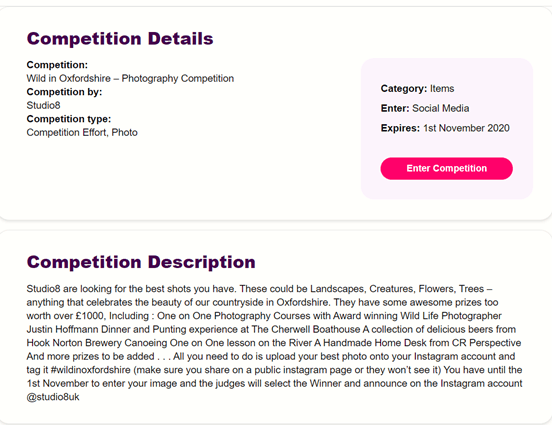
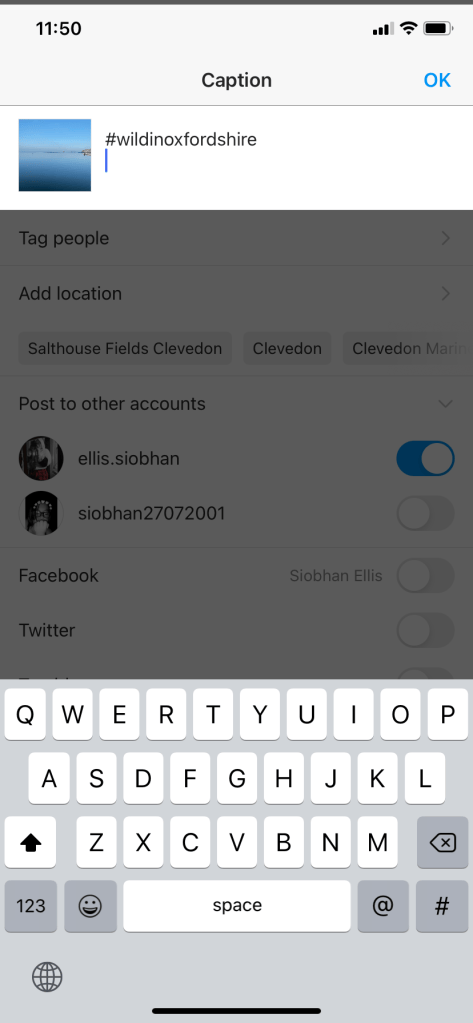
For this competition I looked through some of my images to see which one fit the competition brief the best I found a image that I really liked and it fit the brief well so I uploaded it and used the hashtag so the judges could find it, I had a look to see if I could find any past winners to see what kind of images have won but I couldn’t find any.
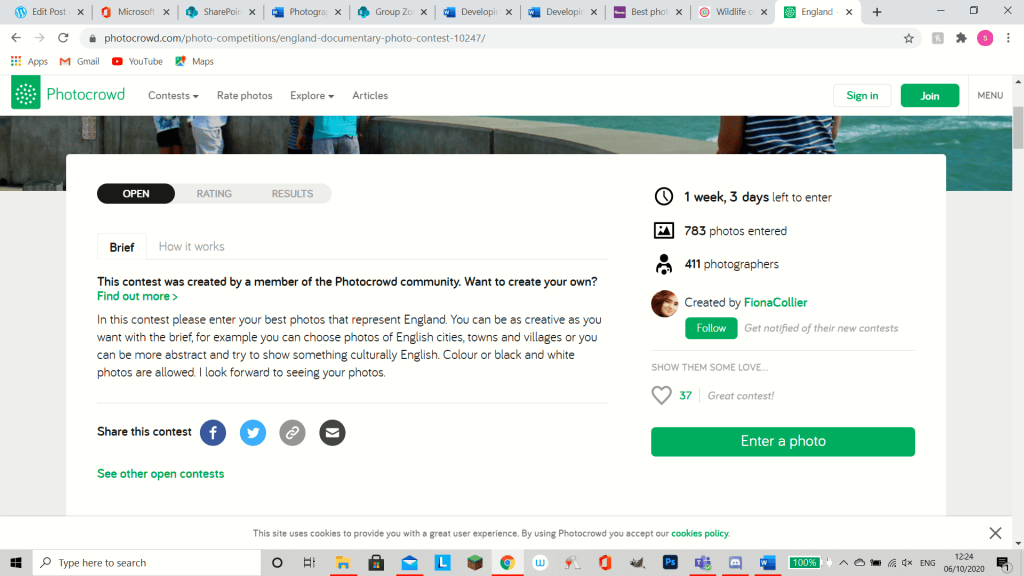
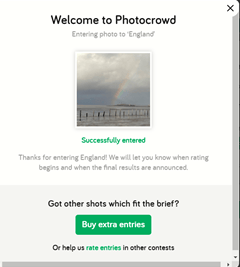
I also found this competition it is about showing England through photography so i had a look through my images and found one of Burnbeck pier in Weston which is a well known pier around the area.
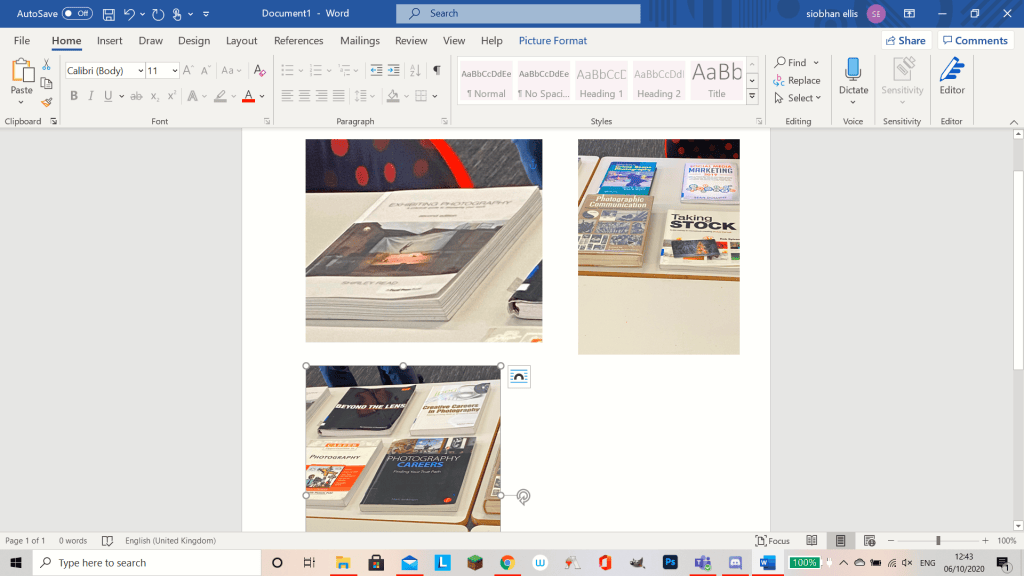
These are some books we were recommended to look at to help with this project as it will help us understand what we are looking at for the project.
The ethics of photography. sometimes a photographer is asked to do something or take pictures of something that is outside of their comfort zone so they rather stuck on whether to do the work or help the person I shall outline some to help explain my point.
https://www.bbc.co.uk/news/world-us-canada-42864421
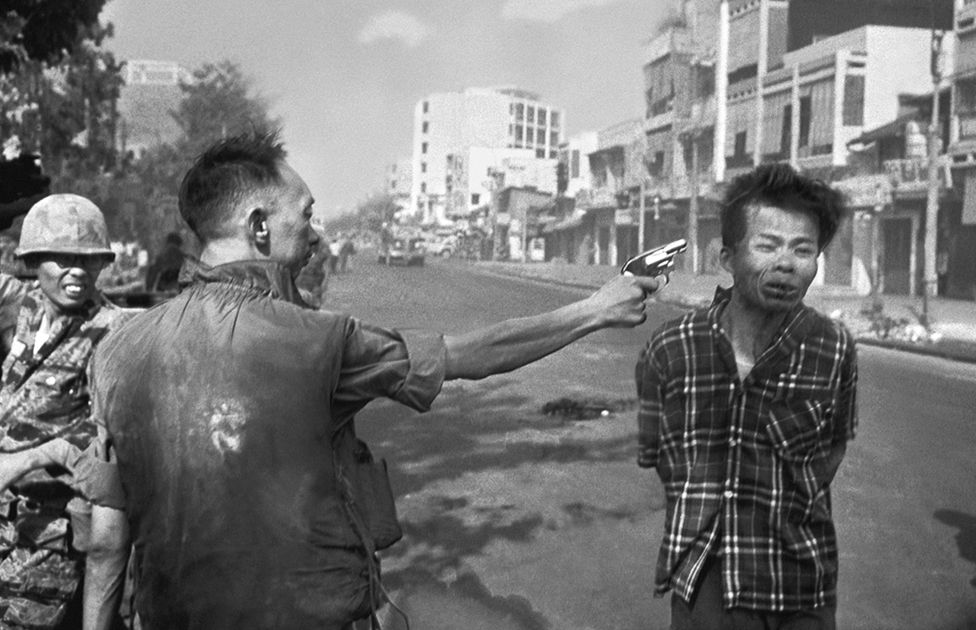
The question posed here was is it appropriate to show a dead body/someone being shot in a publication such as a new article.
I feel that in this case they should this matter with a bit of respect as this man was a human who had rights and also they should of showed some respect for his family as the news might of come as a bit of a shock to them.
On the other hand I can also see how people can use this image as a learning tool about what war is really like and the effect it can have. if this picture wasn’t taken we wouldn’t have known how bad the Vietnam War was and this image led a lot of decisions on war and the effect it has.
https://www.theguardian.com/technology/2014/sep/21/children-privacy-online-facebook-photos

There is a untold rule on social media that you do not post pictures of other peoples children on your page with permission. however it seems that some people like to bend the rules into their own little version of well the parents did so I am allowed which I find so confusing… as they are the child’s parents they gave life to it I think they are allowed to share a picture of little Timmy at the beach!!
There is a phrase called digital kidnapping where someone takes pictures of someone’s child and makes them out to be there own child and there own pictures which is terrifying. in my opinion I feel that yes parents should be able to share pictures of their children on social media but maybe don’t make all of them public as some people do steal those images and claim them as there own especially newly born babies, I understand that everyone is excited but the image couldn’t be taken so quickly, social media is a good thing for keeping in contact with other people but it also can sometimes be a bit scary so by all means let people post pictures of there family but just be careful who you friend and how public you make the pictures.
Pricing of photographers
making sure that photographers price their services correctly is key, too expensive they wont get business too cheap they wont make enough of a profit.
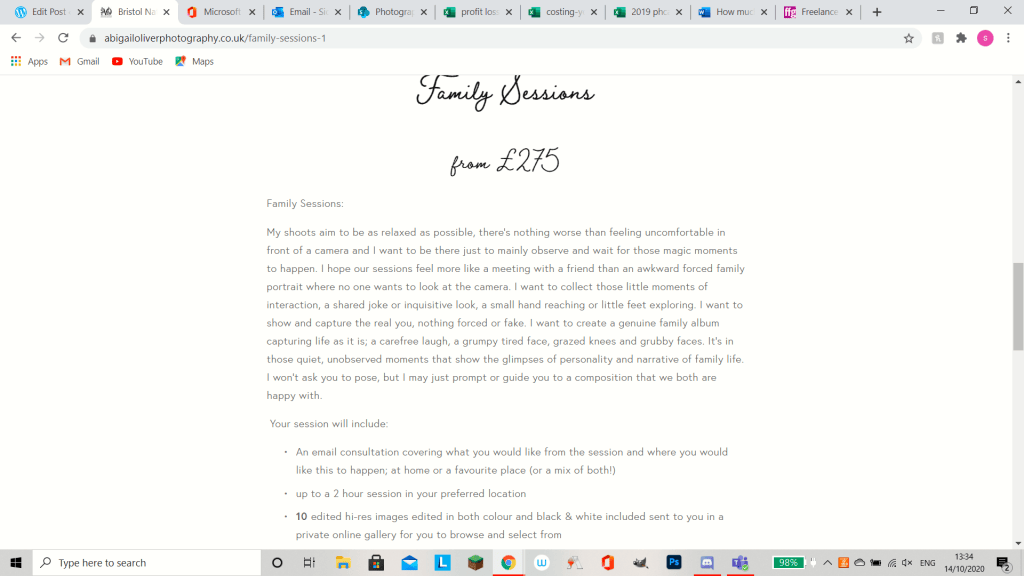
This is the pricing of a local Bristol based photographer a family session is at the lowest £275 which i felt was rather extreme but that is the price for a two hour session.
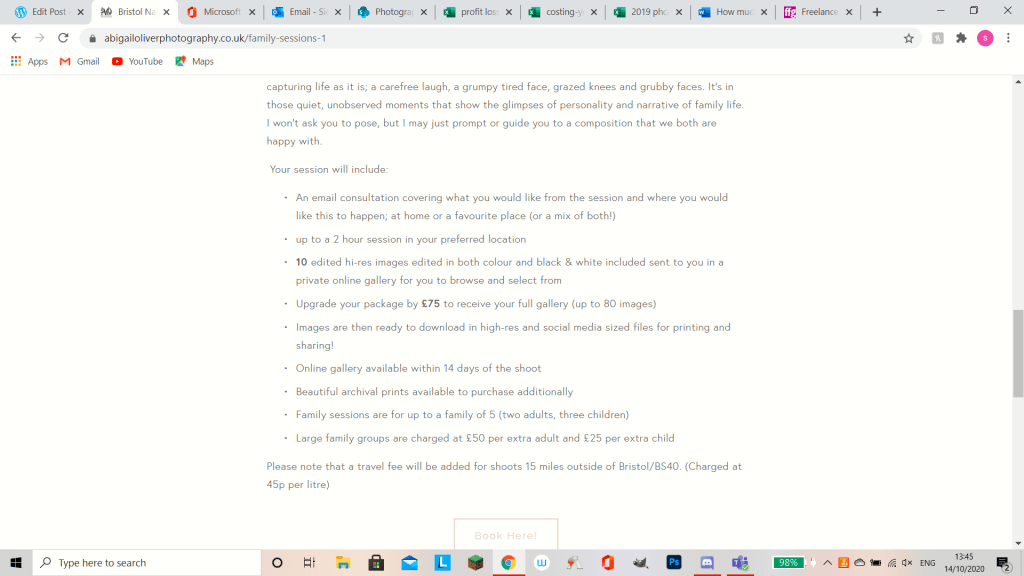
These are the features included with the £275 photography package it surprised me how many of the features people have to pay for I thought that the package was expensive enough I felt that they are already charging people enough.
Workflow
How do I think think of ideas for a project? I mainly look at the brief I’ve been given and think of something that I feel will fit the brief, after that I research into the topic and get some information and I find out whether the idea is something I want to go ahead with. Once I have the fundamentals of a idea I do some more research then I do some test picture shoots to help me decided on the photographs to use and what style to do them in.
My workflow chart:
brief——->research——>initial idea——>finalising idea——>more research——> test photoshoot——>looking through images——>editing images——>finalising final images——>evaluating work
SWOT analysis: what is SWOT analysis?? A SWOT analysis is a useful tool for evaluating a business by zooming into its strengths, weaknesses, opportunities available, and potential threats. Here are some examples I have made.
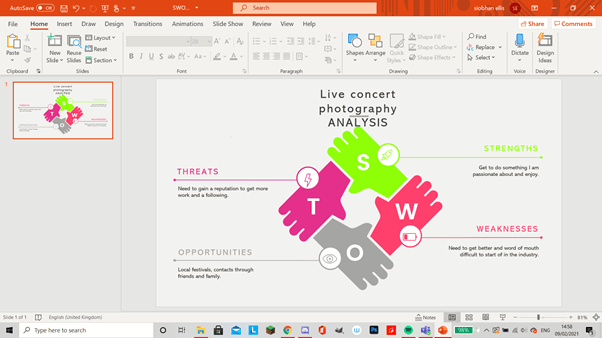
This diagram shows a breakdown of live concert photography a potential career path for me so I did the SWOT diagram to help me understand the positive and negatives of that career.
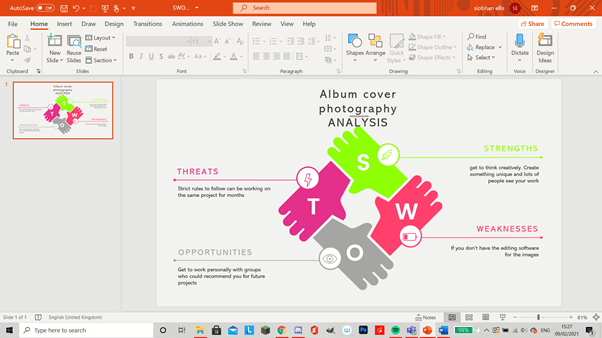
In this diagram I outlined the key aspects of album cover photography which I something I could do if the live concert photography doesn’t work out.
After doing these exercises I feel that it has helped me to critically think through my career paths. The SWOT analysis is definitely something I found useful and will use in the future to help me in making career decisions.
60 second pitch also known as elevator pitch due to the rule that a pitch should be as long as a elevator ride there are some main points that people need to cover in the pitch these are:
- Who are you: underlining your company and what you do is absolutely vital in the first few second of an elevator pitch. A clear and concise introduction is a professional and memorable way to break the ice.
- What can you do for them: When it comes down to it, you are not just at a networking event to give information about your company, you are there to sell yourself and convince investors or clients why they should be coming to you.
- Where do you go from here: you should be using the end section of your pitch to take people to the next step. Invite further questions and be willing to discuss the different options you have.
Through looking at the tips I feel that the 60 second pitch is something that could be useful and something to experiment with in the future I can see how it can be difficult for some people to do as 60 seconds isn’t a lot of time but is worth experimenting with.
My own 60 second pitch:
Hello Sir/Madam
My name is Siobhan Ellis, I am a sole trader which provides flexibility something that is key in a business. What I can do for you is a tailored package to meet your requirements with quality guaranteed, my speciality is live performance photography. To see more of my work see enclosed Instagram handle on the business card provided along with phone number and email address, thank you for listening, I look forward to your questions.
Different ways to be a self employed photographer.
There are many different ways to be a photographer and to register as a self employed photographer which helps to establish a platform there are three different types of ways to be registered as self employed photographer these are:
- Sole trader: Most photographers work as a sole trader. Is the most simple method of working and freedom over your actions-does not stop you from employing or partnering on projects. All businesses need to understand that an invoice is not personal money but belongs to the business. Business costs need to be met before any profit element can be spent or saved. You are personally liable for all business debts.
- Partnership: Partners also have liability for business debts. One partner can bind the other. Legal binding agreement should be drawn up. unforeseen problems can crop up i.e: illness, death, copyright ownership, ownership of equipment pursuit of other interests.
- Limited company: Companies registered under the Companies’ Acts are separate legal entities in own right. Company directors may be safe from debt liability unless personal guarantees are given (usually required if borrowing money from banks.) Company assets belong to the company not the shareholders. Bureaucracy is substantial-accounts need to be filed with Companies House. Forms need to be filed each time there is a change of Director of Company Secretary. You can work as an employee (taking a weekly or monthly wage.) You can reclaim expenses (petty cash/mileage etc) if records are kept. You can be a director and take a dividend.
Our competition.
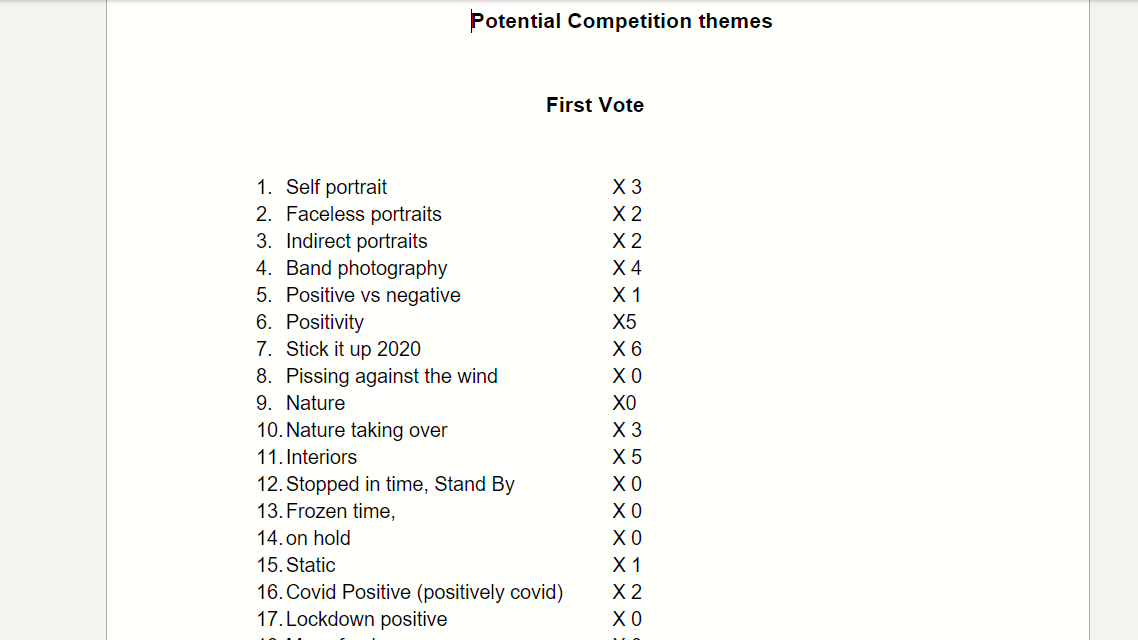
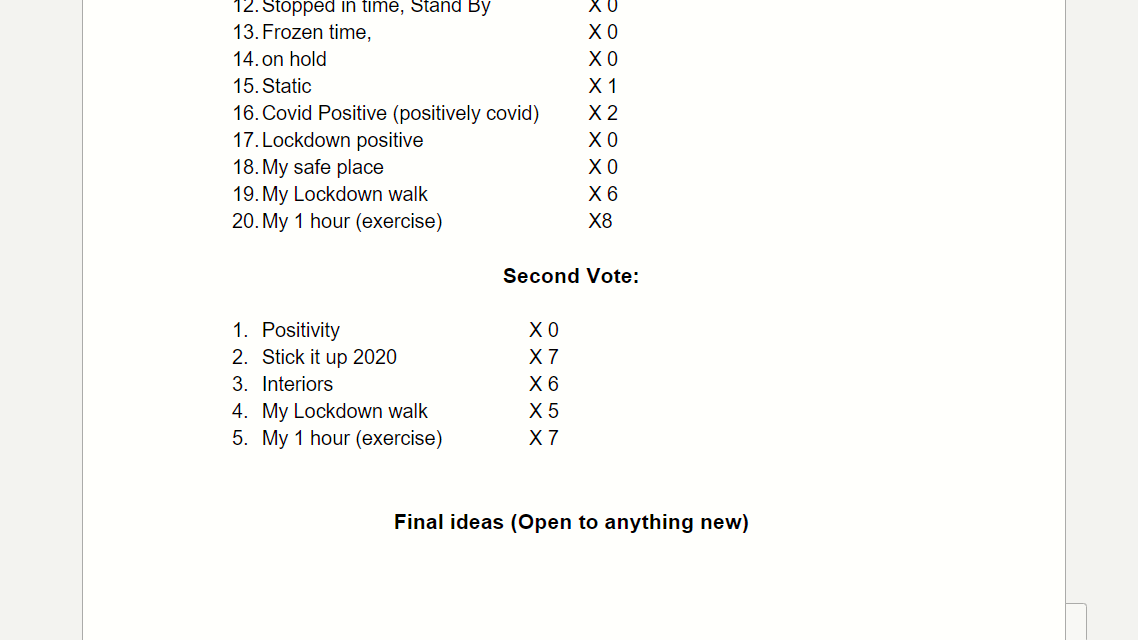
We were set a task to make our own competition for this we decided on the theme ‘what got you through’ this was due to the covid-19 pandemic and the lockdowns that had occurred we did have other ideas for a theme and to help us decide which theme we wanted we had a vote on all the different themes we had many votes to help us decide on the theme as shown below, this process helped with decision making and critical thinking which will help in the future when we may have our own business we will need to make critical decisions about who to to hire and where to put finances.
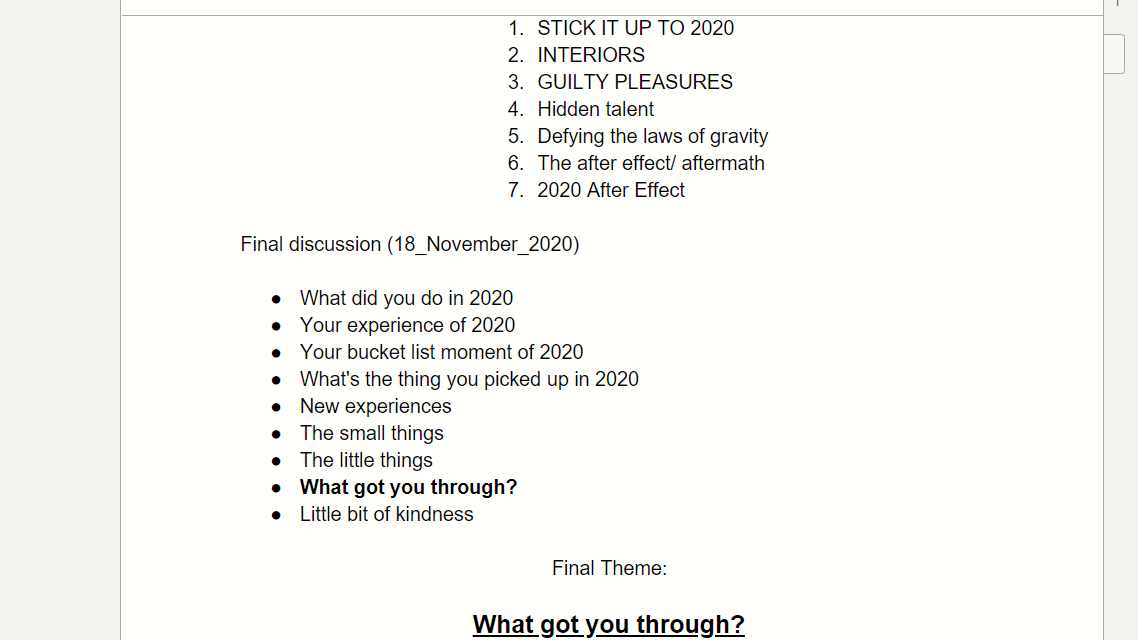
After we had decided on the theme we then started to get the word out through social media. We planned to create and distribute posters to schools and community venues as well as doing talks to help spread the word, engage people with the competition. Talking face to face and going to places helps to promote and foster commitment from individuals, more than social media. However a lockdown was imposed overnight, the day after we returned after Christmas and before we were able to go into schools to spread the word of the competition. So we had to rely on social media as our main communication to everyone. We didn’t know how long the lockdown would be in place so had to adapt. I was put in charge of the Facebook site. As we unable to go into schools and introduce ourselves we decided to put up little bio’s about ourselves to create a human face to the organisers as a way of connecting us to them. As it was on social media we didn’t feel the bios needed to be professional, social media doesn’t tend to be used in a professional way as a website is (unless you are on linked in for example which we weren’t). Historically more under 19s enter the competition then older age groups so we wanted something that would draw them in, engage them. However it was pointed out by our tutor that these weren’t “correct” and we needed to be “professional” given that this was our primary mode of communication to our target audience.
We needed to use Microsoft Teams to communicate between each other as we weren’t in the university at this time and lockdown restrictions meant we couldn’t all meet up in person. This I found very difficult. it is well documented that using zoom, teams etc tires you out more than being in class. In addition I am dyslexic so have additional disadvantages which further tires me, my brain is trying to comprehend what it is seeing and hearing without the visual and non verbal cues you get when in a class environment.
It became apparent when somebody consistently didn’t attend video calls or respond to Emails, that the likelihood is that they hadn’t been able to undertake their assigned tasks. The rest of the group within a meeting decided we needed to re-assign these roles to insure they got done. consequently I volunteered to take on the additional role of sorting through and labelling all the images for judging. As I sorted out the images, I was aware of the names of the entries and participants, therefor to prevent any chance of bias I wasn’t involved in the judging. after numbering the images I felt I should add the title the participants gave the image when they entered because it added extra detail to the image.
Financial Awareness
Before this year I didn’t consider pricing and what to charge for being a sole trader photographer. After doing research it is clear to me that you have to bear in mind multiple factors such as cost of materials, your time as a photographer, unforeseen circumstances i.e. illness or cancelation of event. This is something that you need to consider and write into a contract with a client, the main factor is deposits which is something that can be returned if the photographer doesn’t undertake the transaction or if the person cancels. This gives both parties security and clearly defined roles and responsibilities. before doing my research I was uncomfortable on how to price my services due to the feeling of over or under charging but after doing this research I am more comfortable with how to price my services in the future when I set up my business.
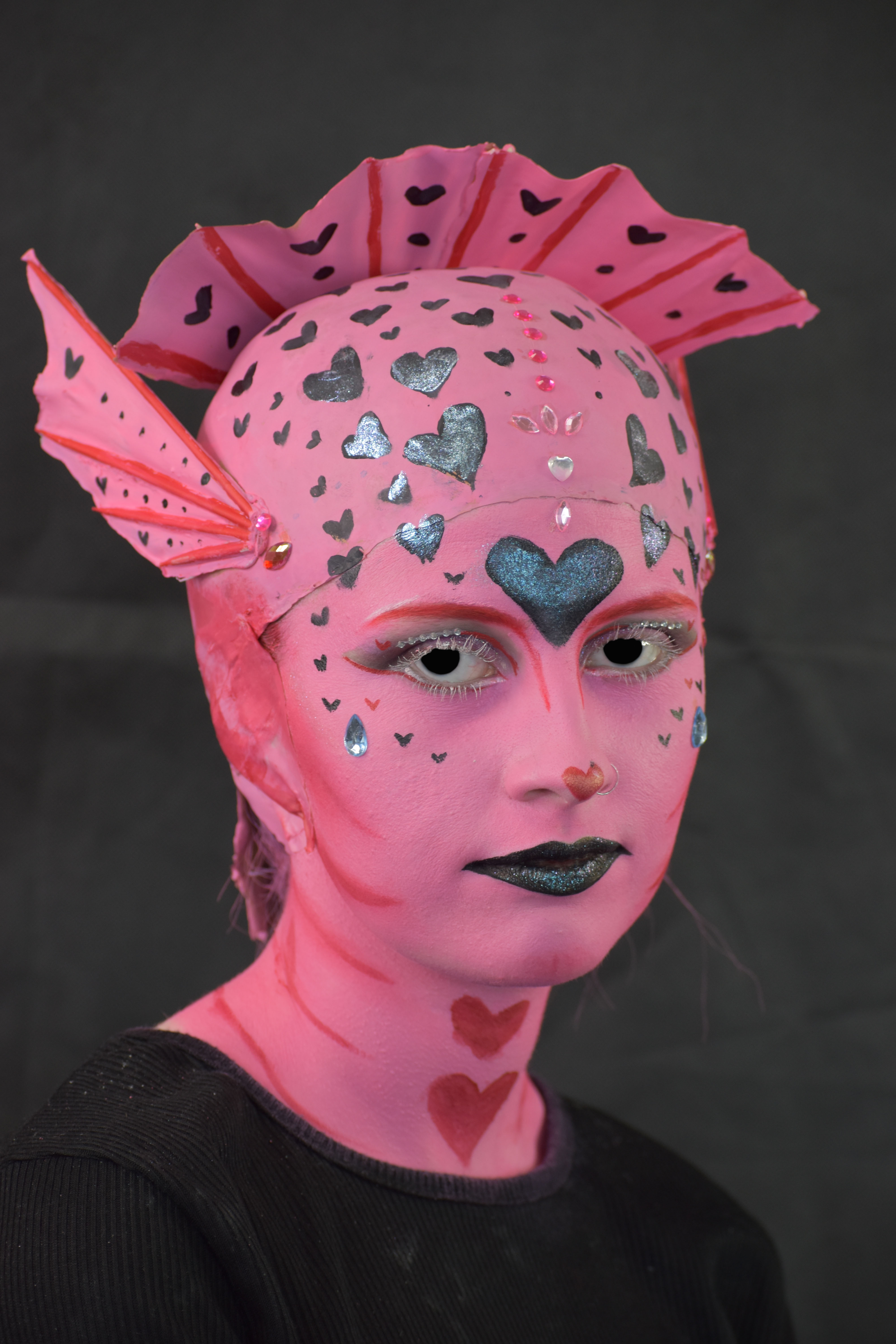
Work Experience
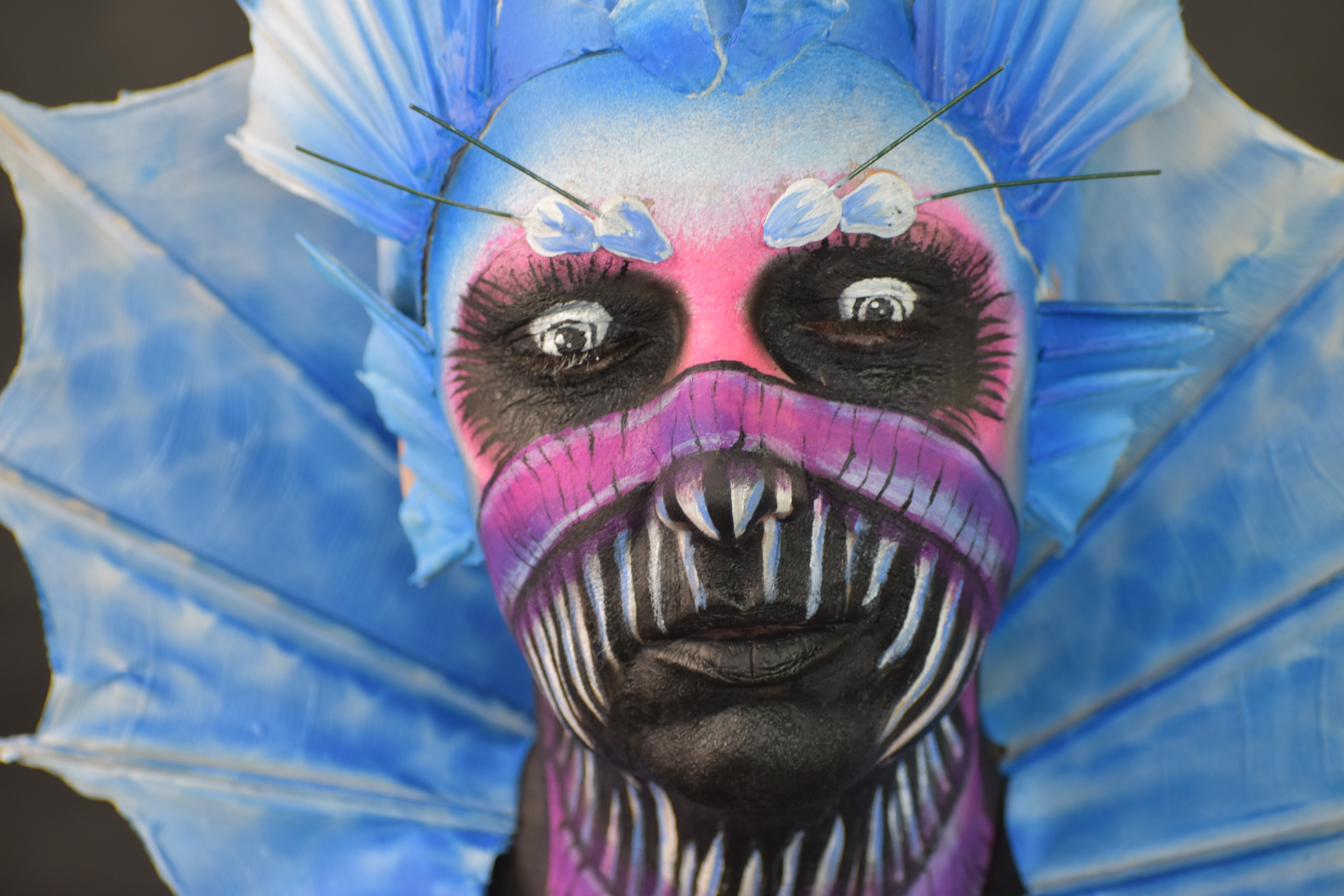
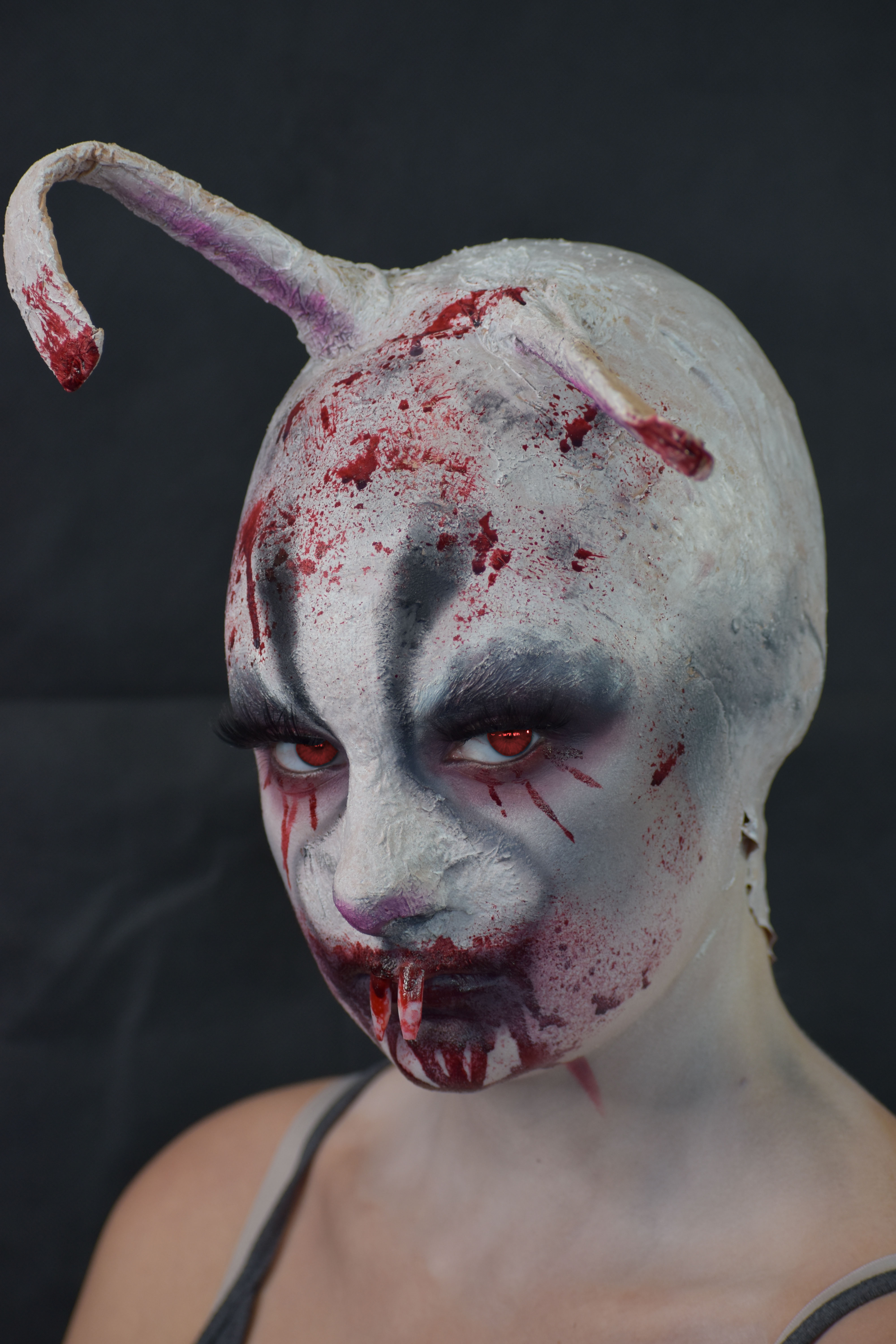
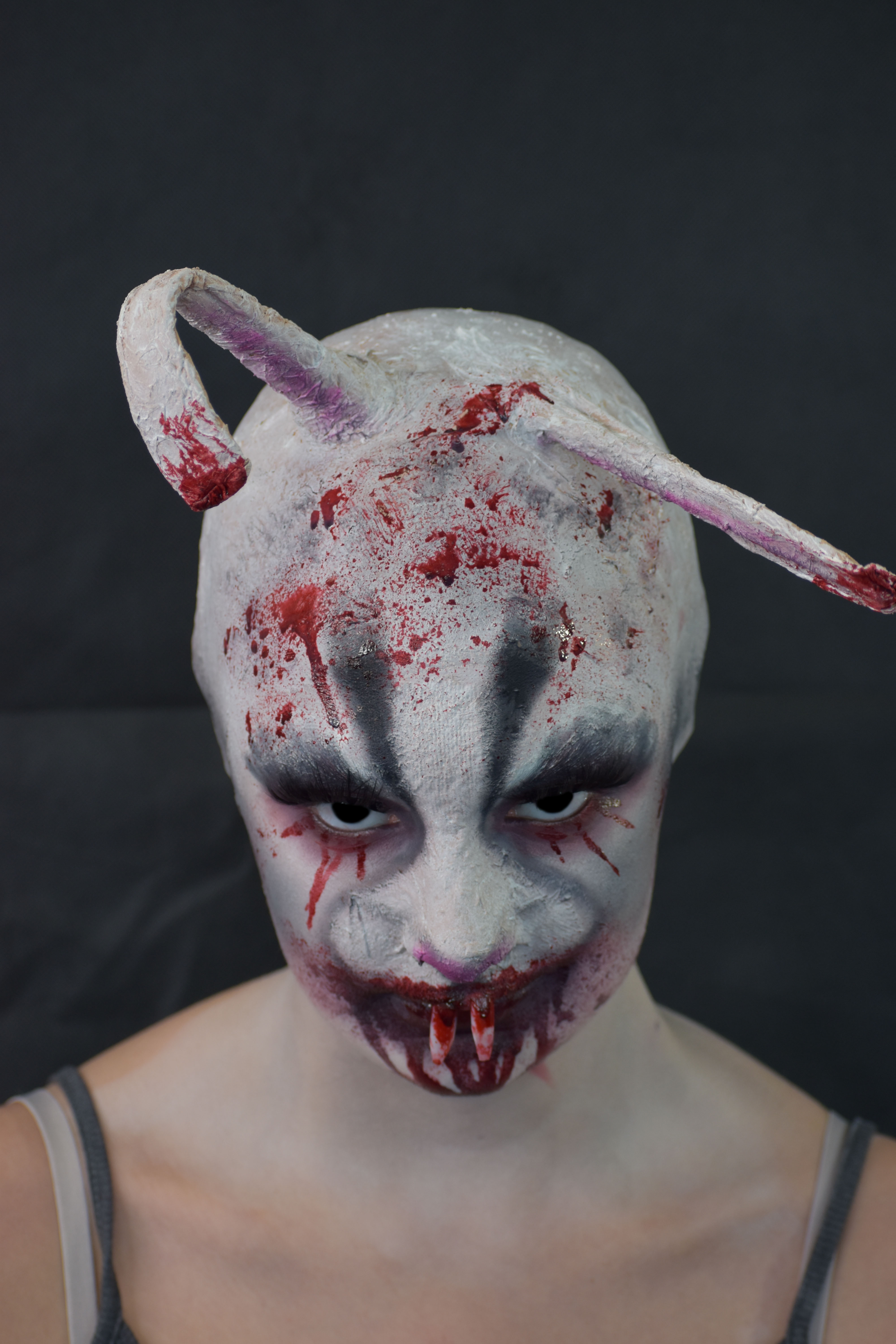
Work experience with makeup students showcasing their skills following lockdown. I was given the opportunity to take images of students who undertook their own makeup, for this they had assembled a simple lighting and backdrop set up which enhanced the colours.
The pictures that I predominantly took were portraits, due to it mostly being from shoulders up and to be used in their portfolios. Some knew how to pose naturally so didn’t need direction. After I took several images, I would show the individual what I had taken to let them see them to ask which ones they particularly liked zooming into detail they liked. This gave opportunity for further suggestions from them and myself. other students needed more direction and prompts for posing to showcase their work I repeated the process with each person of showing them the images to get feedback and suggestions.
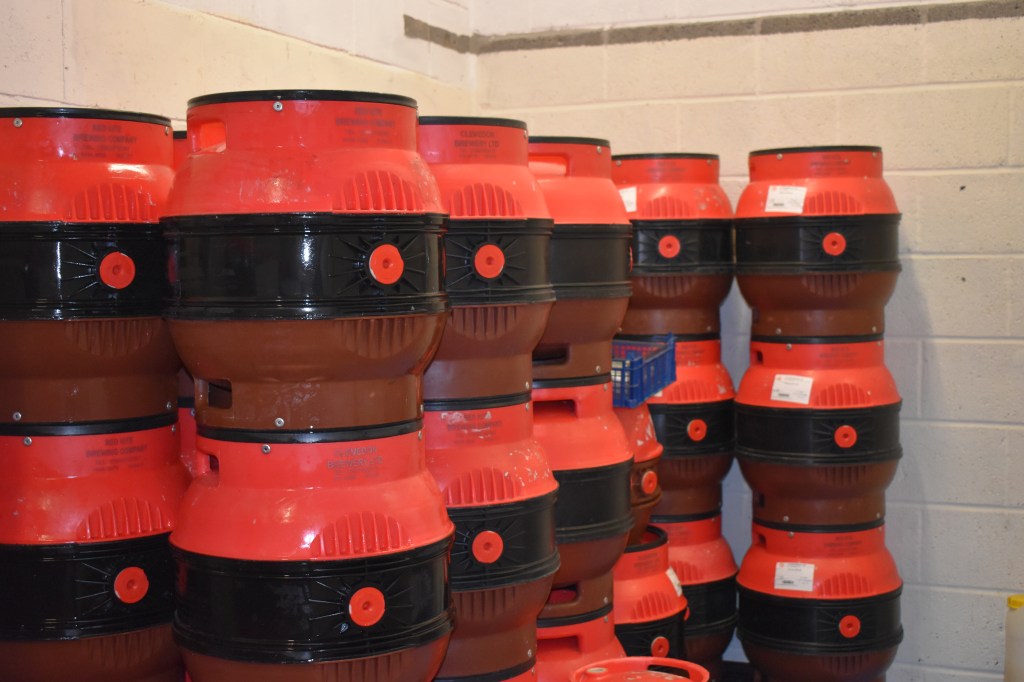
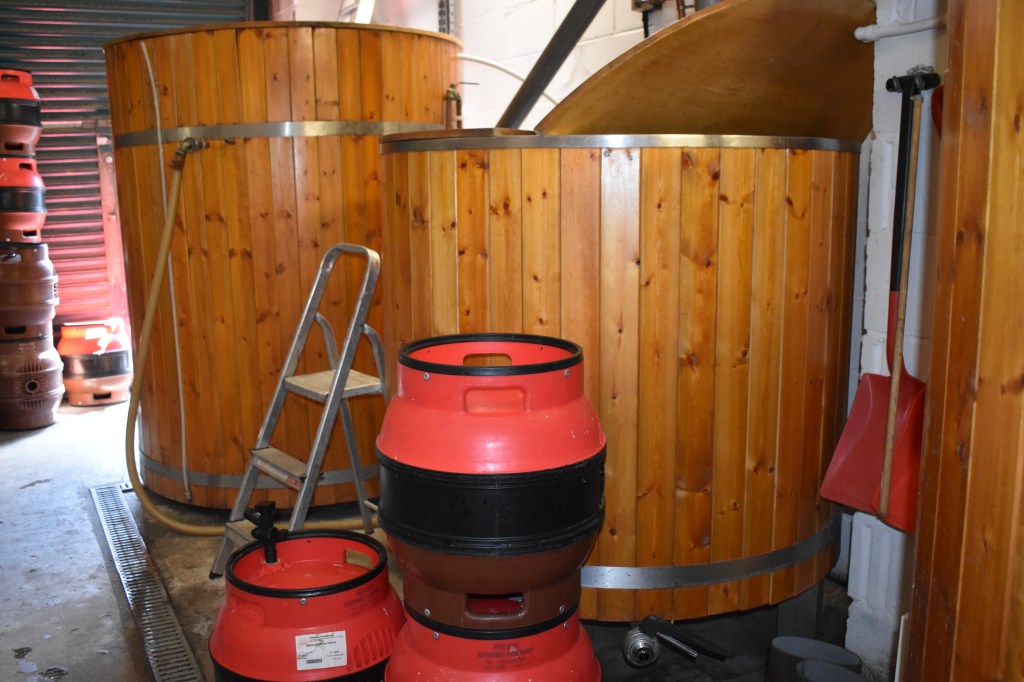
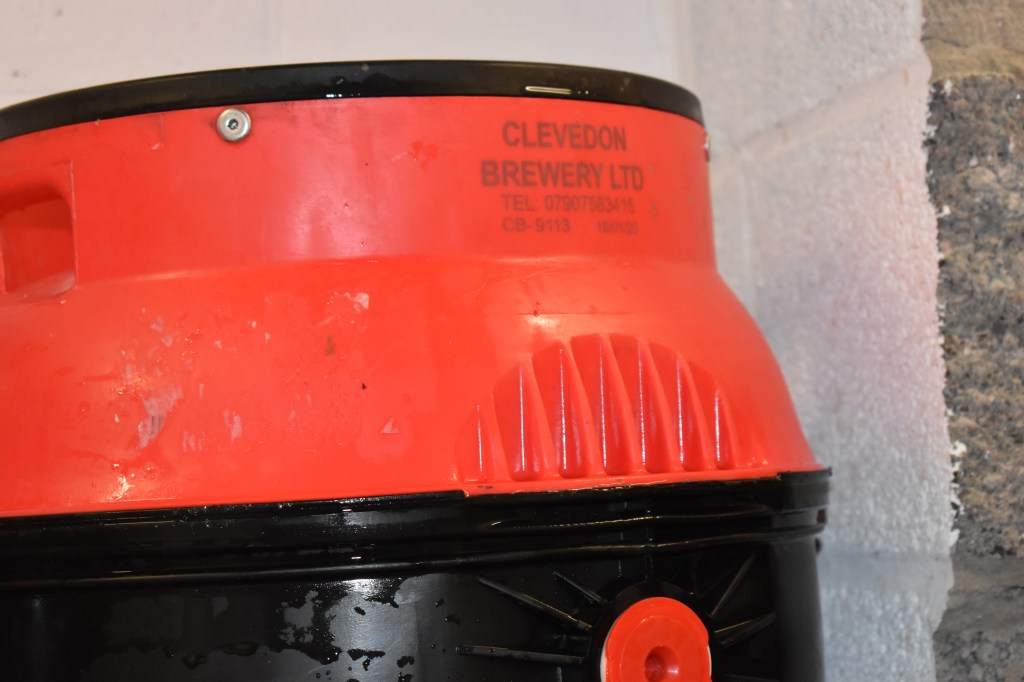
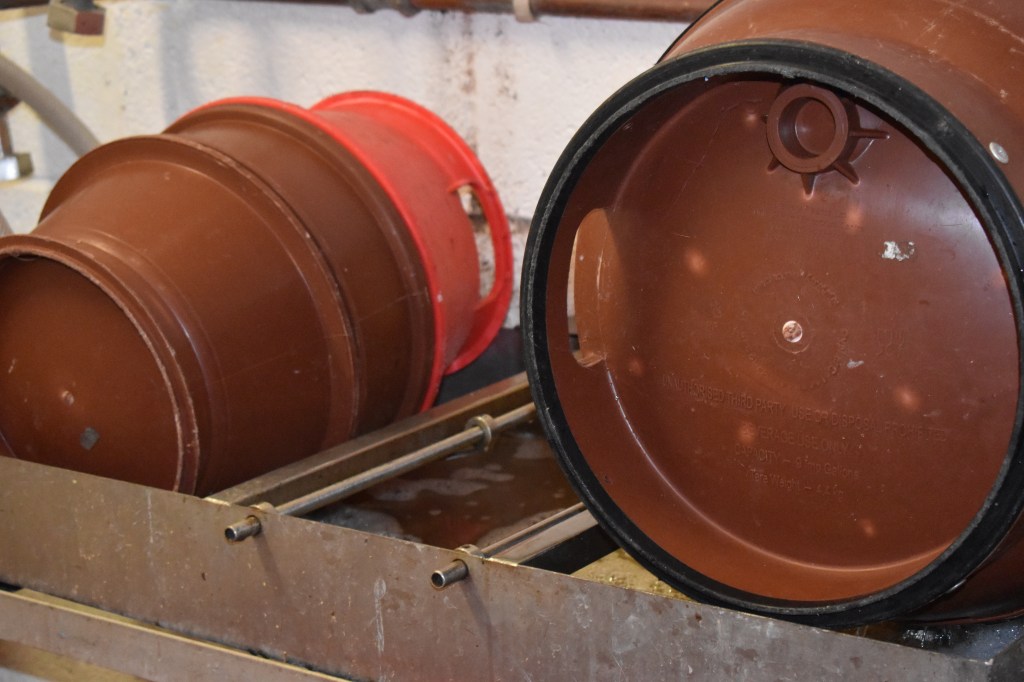
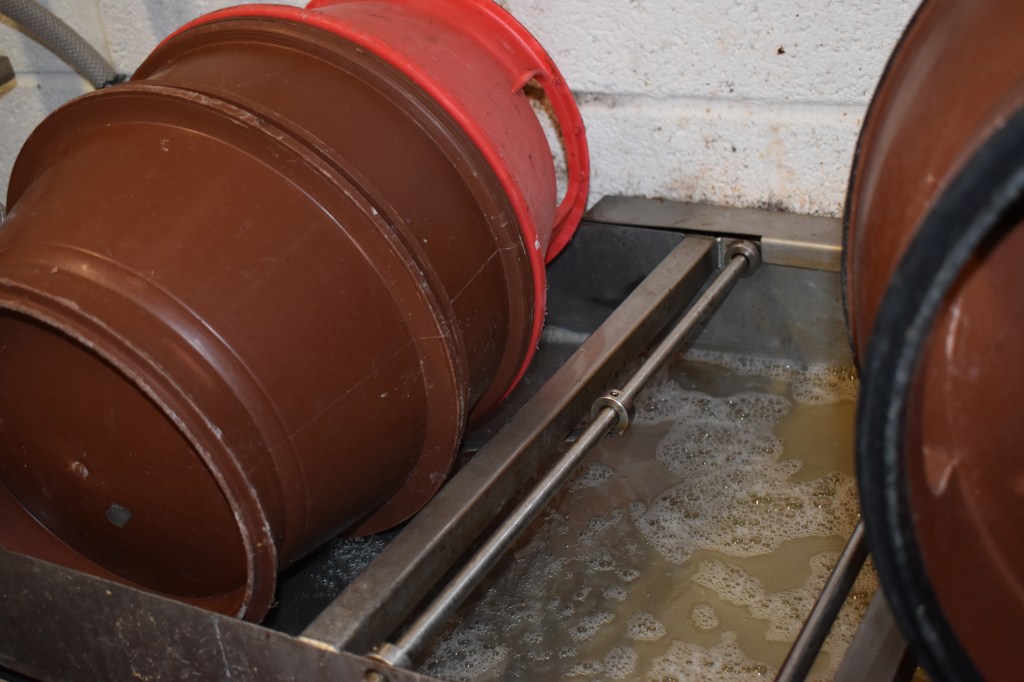
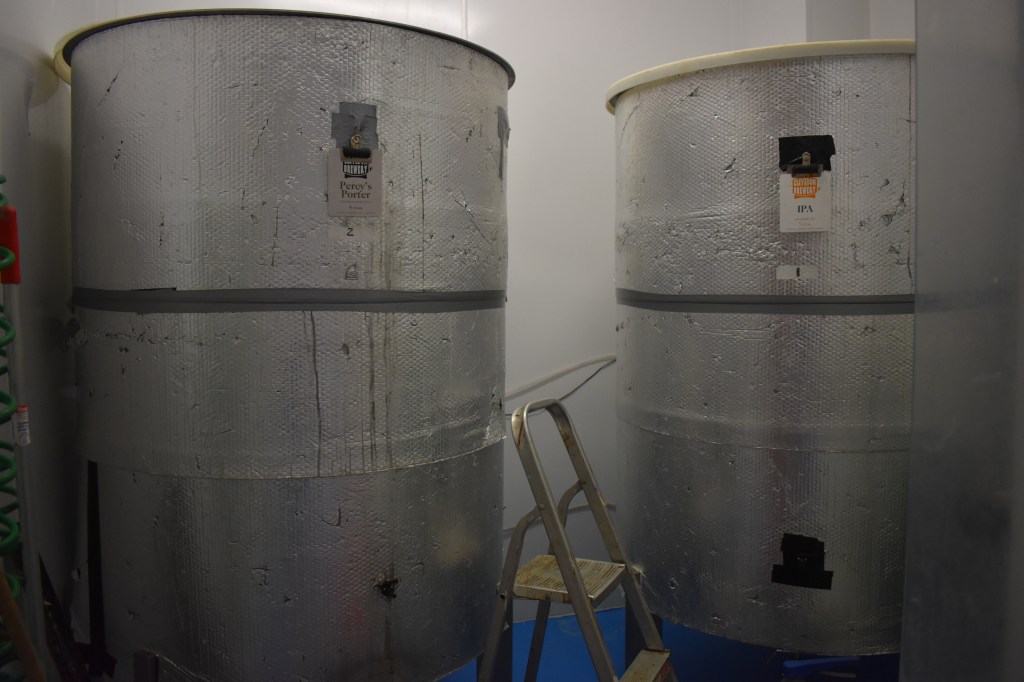
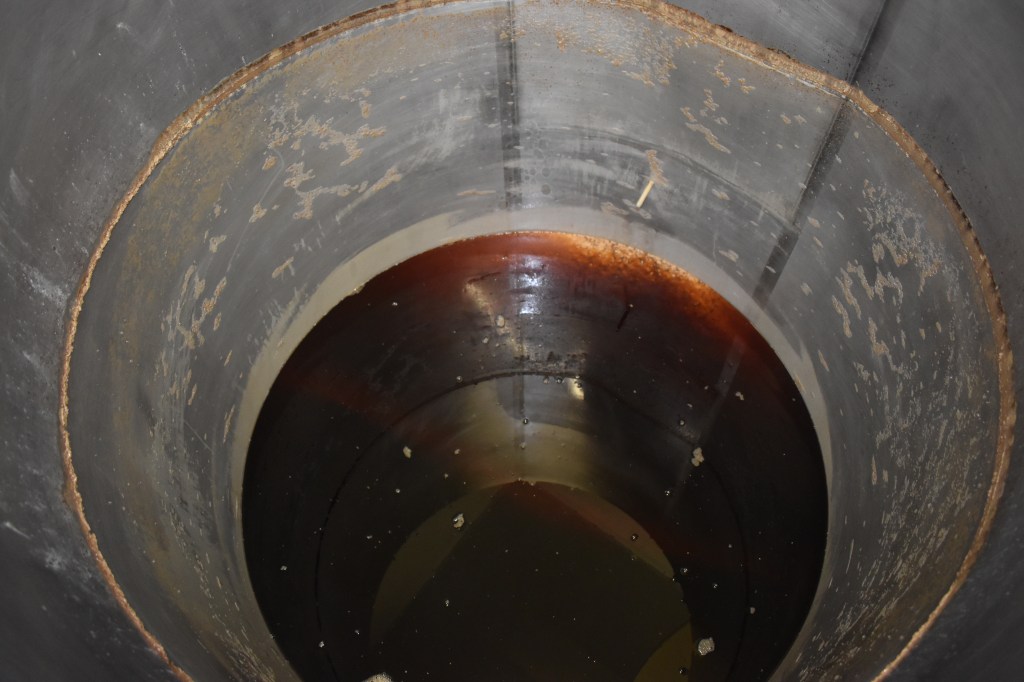
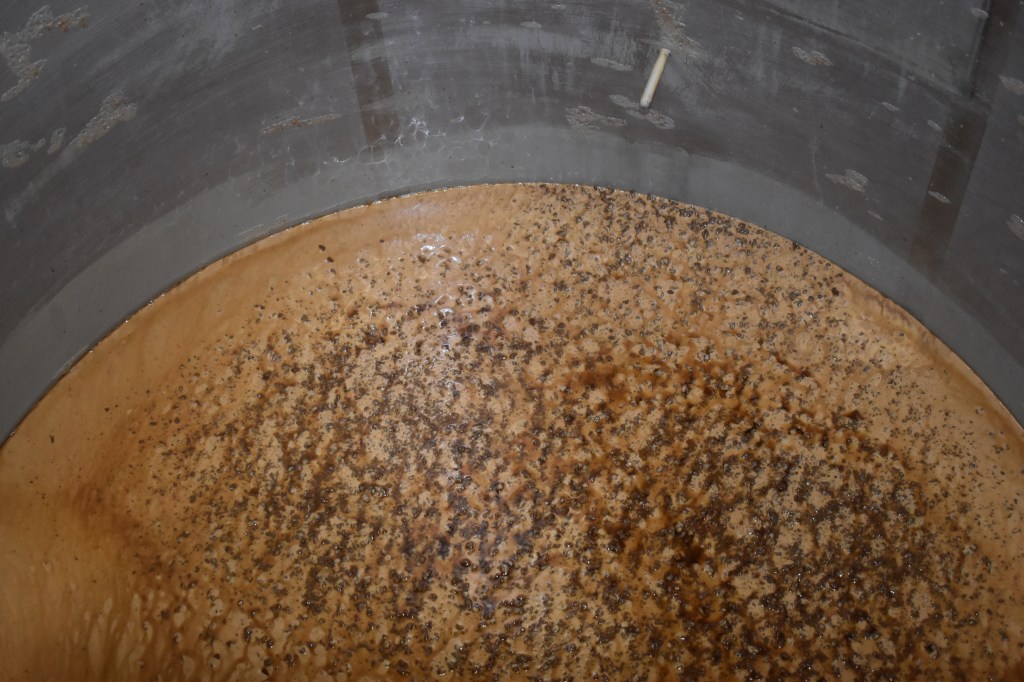
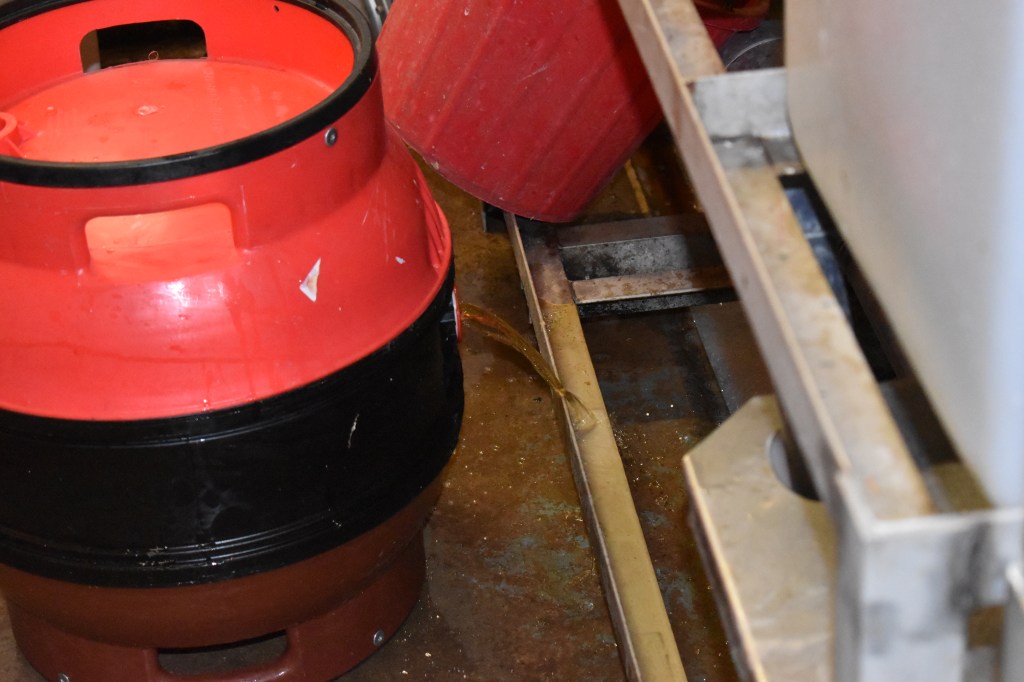
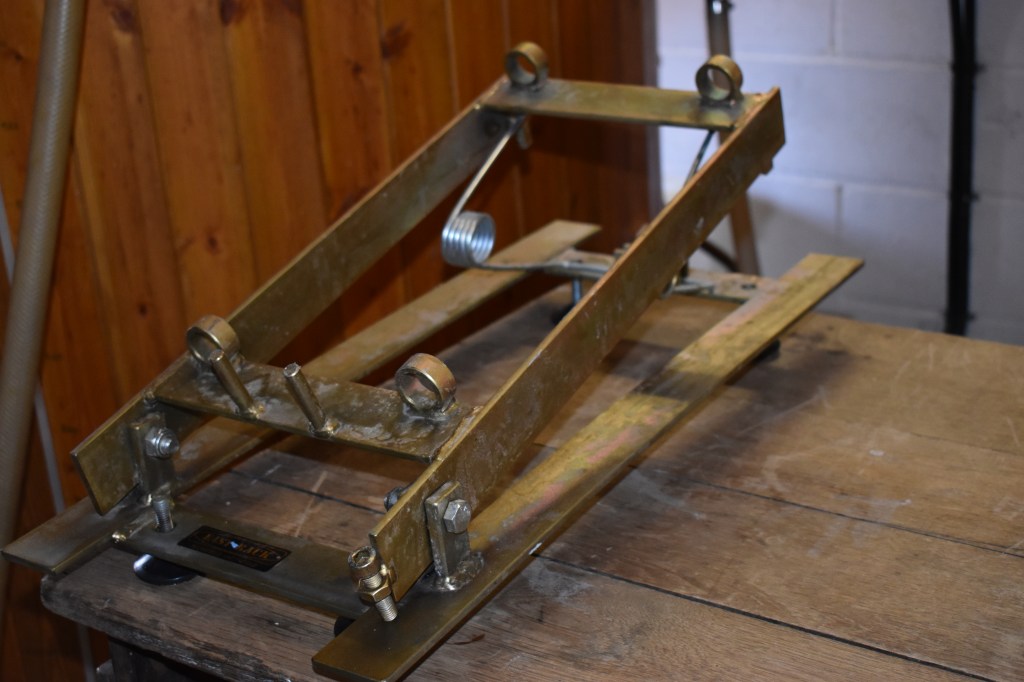

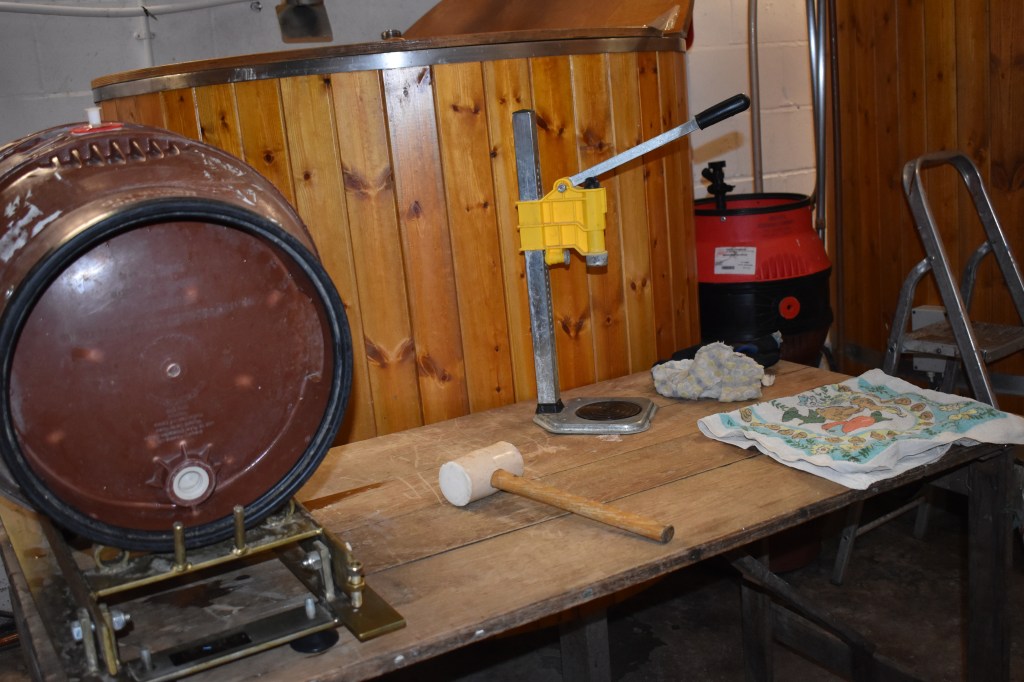
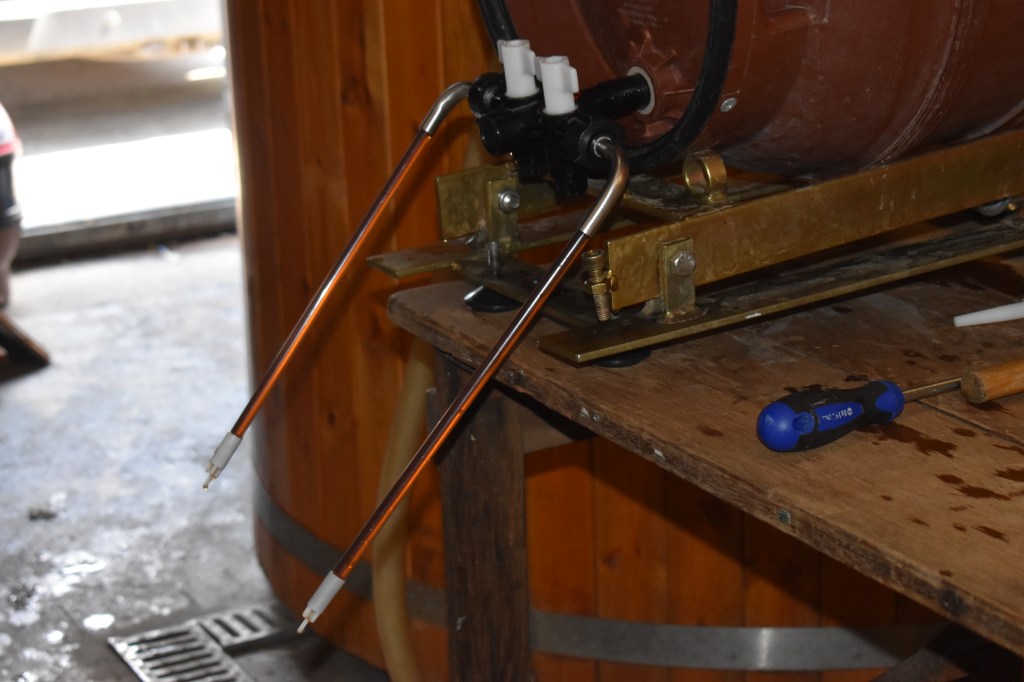

I choose to do a second work experience placement this one being an independent brewery business where photos would be used for publicity and marketing. What I did was I visited the brewery to discuss what images they wanted beforehand. On the day chosen by them due to production of beer being dependant on certain conditions I went in laden with camera and different lenses. Firstly I had a look around the brewery to see positions of key equipment which would be good to capture and consequently best place and position to stand to get the best image. A consideration was also light levels available, fortunately chosen camera to capture images has built in flash. after initially chatting with the owner I was given free reign to walk around the brewery taking images so had full creative control.
This was different to the first work experience with the make up students and was why I chose to do two placements with contrasting styles of photography. One being portraiture and the other commercial marketing. I didn’t need to show the owner images as I went along as he had full confidence in my ability to capture the relevant images which meant his work process could flow. He could concentrate on what he was doing and I could concentrate on capturing the moments, none of the images was staged.
What I have learnt throughout this process: I have learnt how to make my business (when I start it in the future) the best I can and how to present myself in a professional way. For example how to draw up a contract that benefits both parties(the photographer and the client) one of the key factors of a contract that I have learnt is deposit, which helps fix in the contract and means that either party can get a percentage of money back if the event doesn’t go ahead.
Another key point I felt was key for me was the 60 second pitch as it shows you and the business in a quick and professional way which is a extremely good thing as in interviews people make a decision on whether they want to hire you within the first couple of minuets of meeting you, so having something short that gets the main points across will help potential clients decide if they want to hire you.
 Editorial Project